North Main Greenville Infill Lots: How Width Shapes Lot Splits
October 15, 2026
October 15, 2026
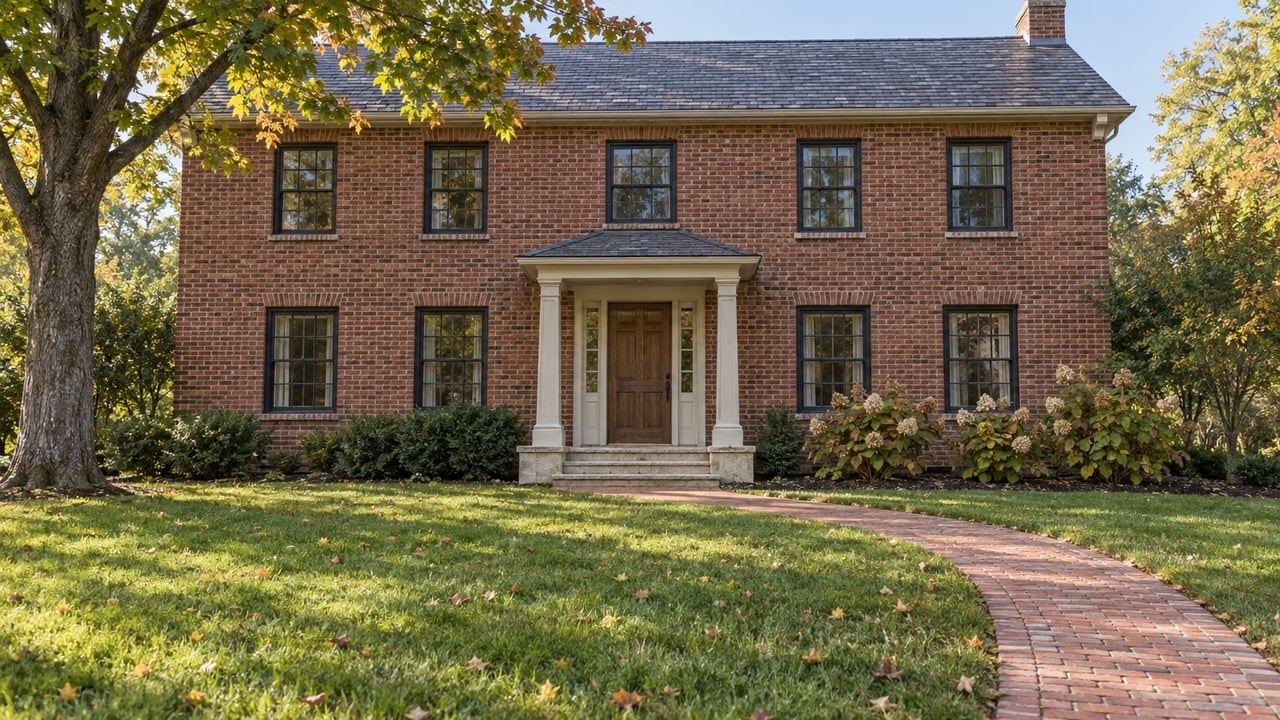
Two houses on Avondale Drive were listed for sale in February 2025. Both were vacant and had been damaged in Hurricane Helene. They sat on the market for several months before The Gallo Co., a Greenville real estate firm, made an offer and closed on the parcels this past January. The plan that followed calls for seven single-family homes where two had stood.
That gap between a listing that struggled to sell and a site that could hold seven homes is the most useful fact a North Main buyer can learn this fall. In the House C zoning district, the land under an older house is valued by its street frontage more than by the house. On Sept. 28, 2026, Greenville City Council voted to keep it that way.
The two parcels, at 240 E. Avondale Drive and 107 N. Avondale Drive, are both zoned House C District, or RH-C. That district allows lots as narrow as 40 feet. Together the site covers 1.4 acres and has 330 linear feet of street frontage.
| Measure | Avondale Drive site |
|---|---|
| Zoning | RH-C |
| Street frontage | 330 linear feet |
| Minimum lot width in RH-C | 40 feet |
| Homes allowed by right, per city reporting | About eight |
| Homes planned | Seven |
| Neighborhood average lot width cited by Councilmember John DeWorken | 79 feet |
Divide 330 by 40 and you get a little over eight. That is why the Greenville Journal reported that the developers "could potentially build around eight homes on the site." Acreage barely enters the calculation. Two parcels with the same 1.4 acres and half the frontage would produce half the lots.
Councilmember John DeWorken, who lives in North Main, described the case as a vulnerability in the Greenville Development Code because it allows seven 40-foot lots in a neighborhood where the average lot is 79 feet wide. Each new lot would be roughly half the width of a typical lot nearby. That ratio drives both the neighborhood's objection and the land's value to a builder.
What the code allows on a site and what a builder can afford to build there are separate numbers. Anthony Gallo, principal broker at The Gallo Co., told the Greenville Journal that seven homes was the most financially viable option for covering the fixed cost of the site work the project needs. "What we do know is that seven homes financially models out enough to take on the risk of the project," he said. In WSPA's report, the developers said they went from the eight homes zoning would permit to seven so the project would better fit the surrounding neighborhood. Both explanations appear in the coverage, and they can both be true.
The homes would be multi-story, about 3,500 square feet each, with potentially four bedrooms and an attached garage. All seven would share a single driveway, which leaves room for new sidewalks and landscaping along the street. Anna Gallo, the firm's managing partner, said each home was meant to model an architectural piece found in North Main.
The economics work in one direction. Site work, utilities, and approvals are largely fixed costs, so each additional lot spreads them thinner. A wide parcel with a tired house can look like a hard sell to a family and an efficient site to a builder, often in the same months on the market. Avondale Drive followed that sequence: a listing that sat, then a buyer who priced it as lots.
Residents organized under the name "One Community One Voice." They raised concerns about density, stormwater runoff, tree clearing, pedestrian safety, and traffic, and they took them to City Council on July 13, 2026. By mid-August, the petition had passed 800 signatures.
City staff answered with a new calculation for the code's 36-month review. Michael Frixen, the city's deputy director of planning, said there had been past cases where subdivision lots met zoning requirements but did not match the lot sizes around them. The proposal went through two versions:
The rule would have applied in House A, House B, and House C districts. City Manager Shannon Lavrin told council that the Avondale Drive project would have produced fewer lots under the new calculation. Here is an illustration of the effect. If the neighboring parcels matched the 79-foot average DeWorken cited, 70% would be about 55 feet, and 330 feet of frontage would hold five full lots. The real figure would have depended on the actual widths of the ten nearest parcels, so treat this as a sense of scale, not a ruling.
City Council separated the lot-width standard from the rest of the code update and voted it down 4–3. Mayor Knox White and councilmembers Ken Gibson, Tina Belge, and Lillian Brock Flemming voted against it. DeWorken, Dorothy Dowe, and Wil Brasington voted in favor. Members raised concerns about how the standard would affect affordable housing development across the city.
For now, the rule that governs infill lots in these districts is the one already in place. A subdivision lot has to meet the width standard of its zoning district and nothing more. In RH-C, that means 40 feet.
Some questions remain open. The other code amendments received first-reading approval on Sept. 28. Formal adoption requires two council readings. We found no published second-reading date and no public plan to bring the lot-width standard back. Staff's August proposal also said subdivisions approved before any new calculation took effect would be considered vested. Timing matters under that kind of rule, because a project's approval date can decide which standard applies to it.
The development code has been in effect since July 2023, and staff has updated it five times since then. The rules on lot size have changed before and can change again.
Avondale Drive was handled as a minor subdivision. To get staff approval, the developers had to present the project at the city's project preview meeting, which they did in March 2026. Anna Gallo said the feedback at that meeting was constructive and that it did not reflect the opposition that came later.
After the July council meeting, the Gallos voluntarily returned for a second preview on Aug. 25 at the Greenville Civic Design Center, 15 S. Main St. They said they would refine the project with their team and the city, look for cost savings that could allow lower density, and then submit and begin construction as soon as they could. We found no public reporting since then on a revised lot count, a filed application, or a construction start, so the project's final shape is still unknown as of this writing.
The process matters for neighbors because the required public step is a preview meeting held early in the review, before a project reaches the council chamber. On Avondale Drive, the organized response came months after that meeting.
For a buyer comparing in-town neighborhoods, the Sept. 28 vote changes what a listing sheet tells you. A few facts that never appear in a price per square foot now carry real weight:
None of this makes a wide lot a better or worse purchase. It means the price reflects two possible buyers, and the code currently gives the builder's math a 40-foot unit to work with.
Does the vote mean a nearby lot will be subdivided? No. It means a split that meets the district's minimum lot width is not held to an extra neighborhood-compatibility test. Every project still goes through city review, including the project preview meeting for minor subdivisions.
Could the lot-width rule come back? Council voted it down on Sept. 28, 2026. We found nothing published since then that points to a revival. The code has been amended several times since 2023.
Does this apply only to North Main? The proposal covered House A, House B, and House C districts citywide. Avondale Drive was the example that prompted it.
If you are weighing a wide in-town lot, whether you'd buy it, sell it, or live next to one, we would be glad to go over the frontage, the zoning, and the comparable sales with you before you decide what the property is worth. Tom Marchant and Marchant Bateman & Co. have followed Greenville's neighborhoods long enough to know that a parcel's history often explains its price. Let's Connect.
This article is general information, not legal, tax or financial advice. Consult a qualified professional about your situation.
Stay up to date on the latest real estate trends.

The same attention to detail and personalized service I learned from the world's leading luxury hospitality brands now defines my real estate approach. Every client receives thoughtful guidance, strategic marketing, and an experience built on trust, communication, and exceptional care.

TOM MARCHANT
[email protected]
(864) 449-1658
ADDRESS
20 OVERBROOK COURT SUITE 400
GREENVILLE, SC 29607